Last updated October 30, 2026
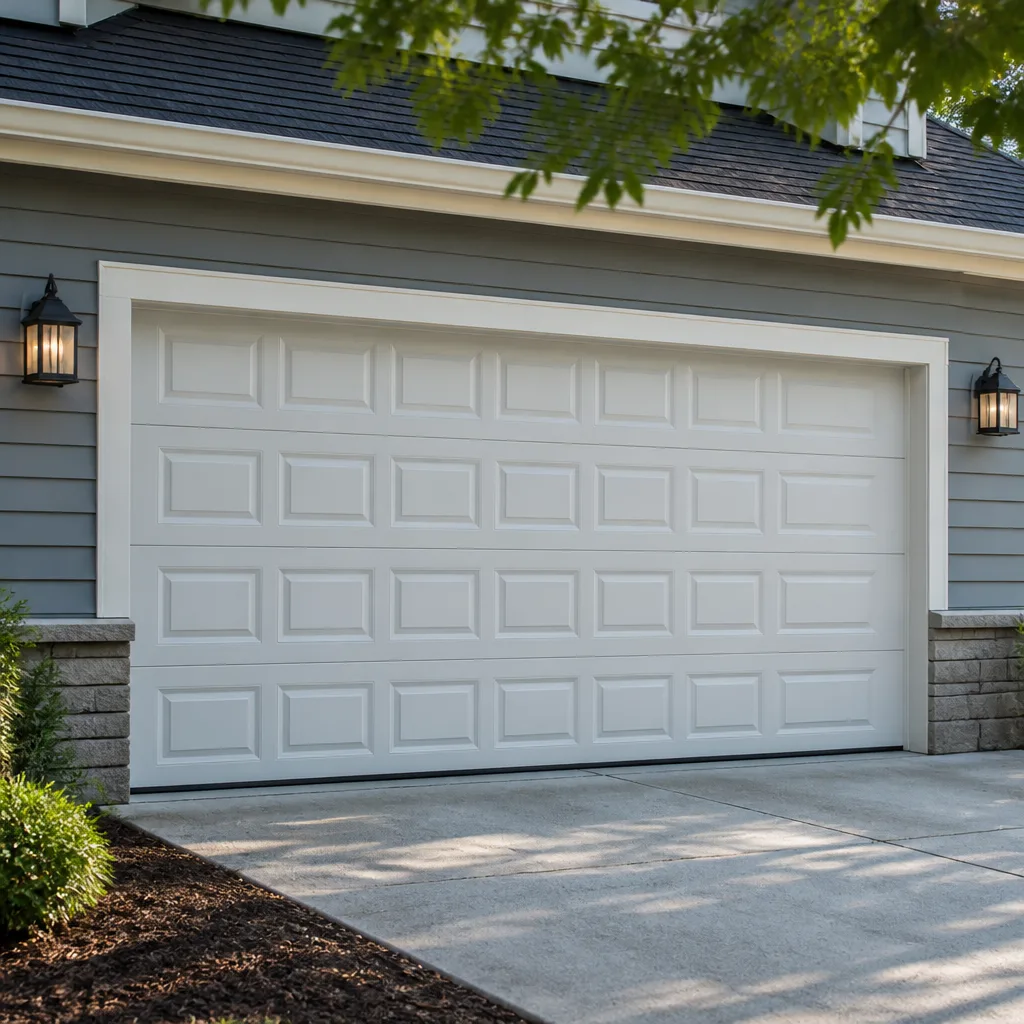 Raised-panel steel
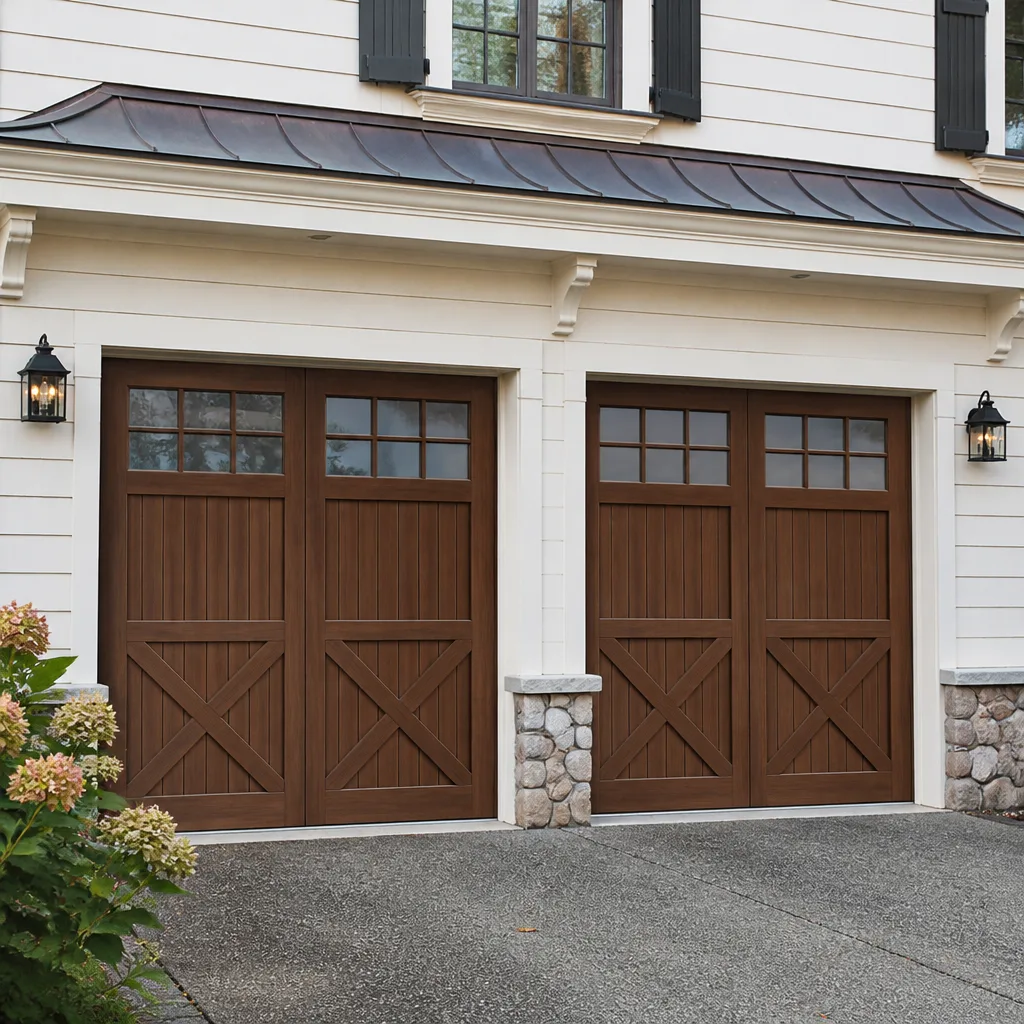 Carriage house
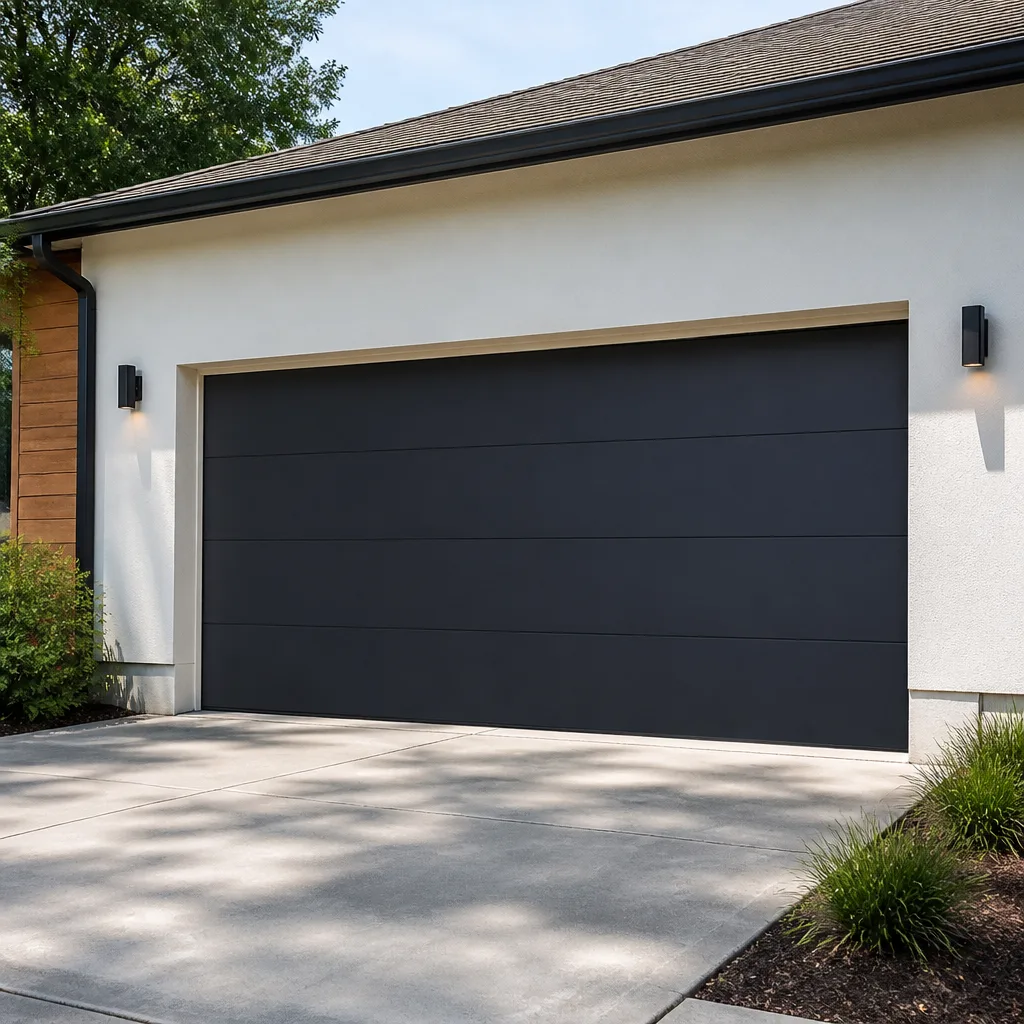 Modern flush
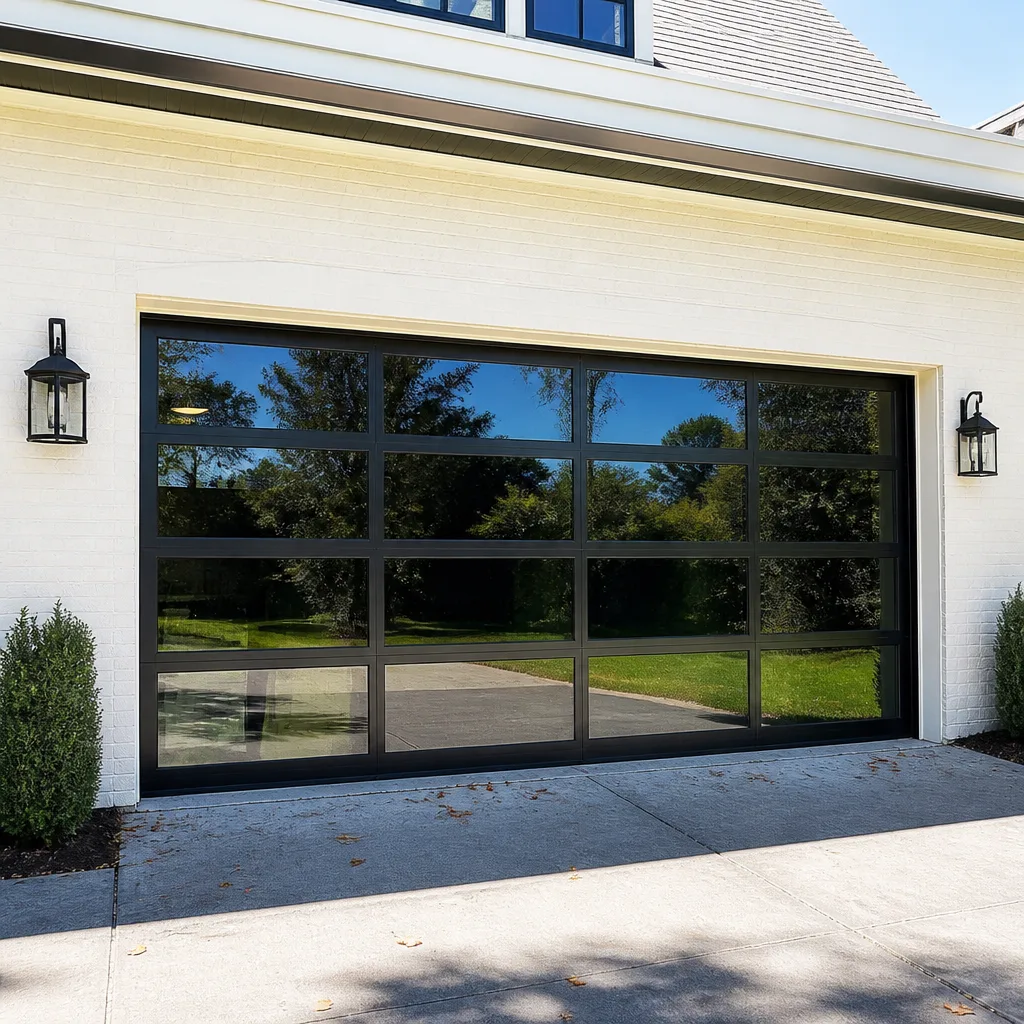 Full-view glass
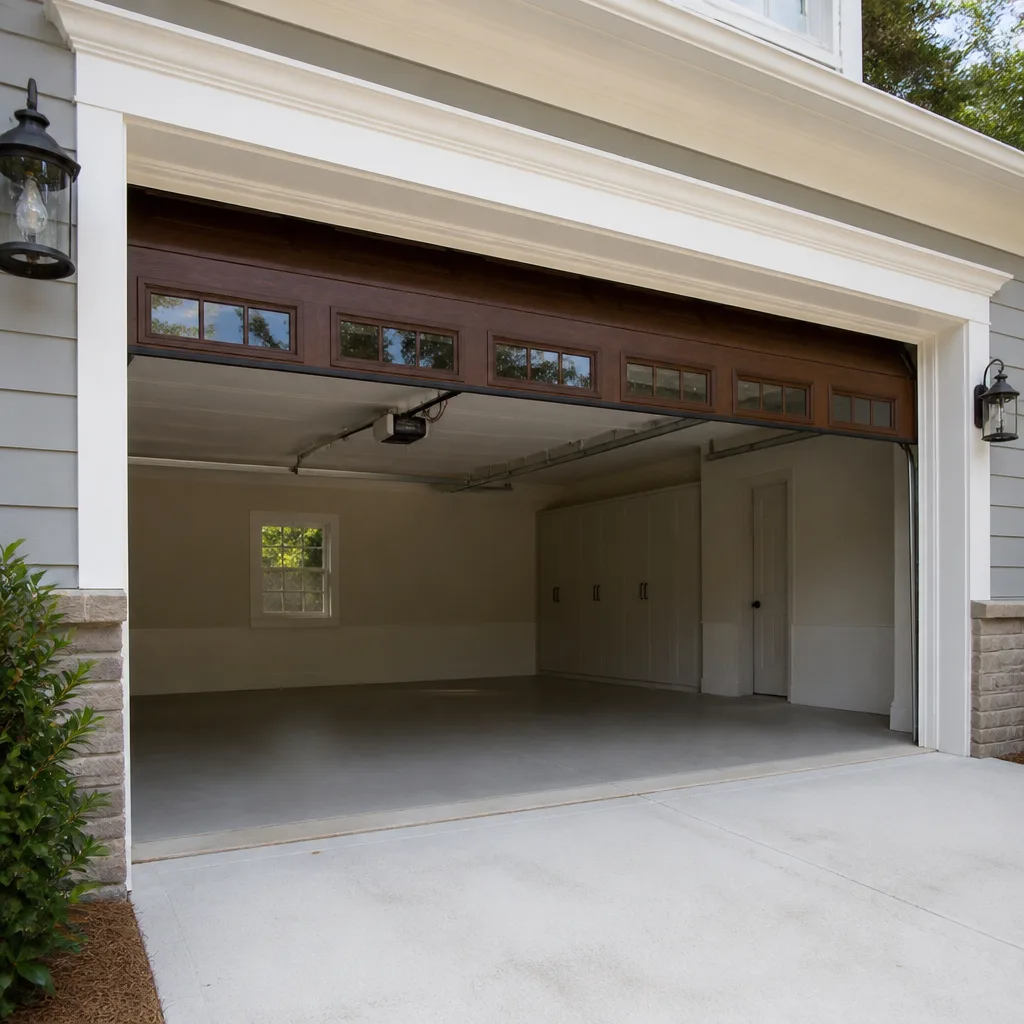 LiftMaster openers
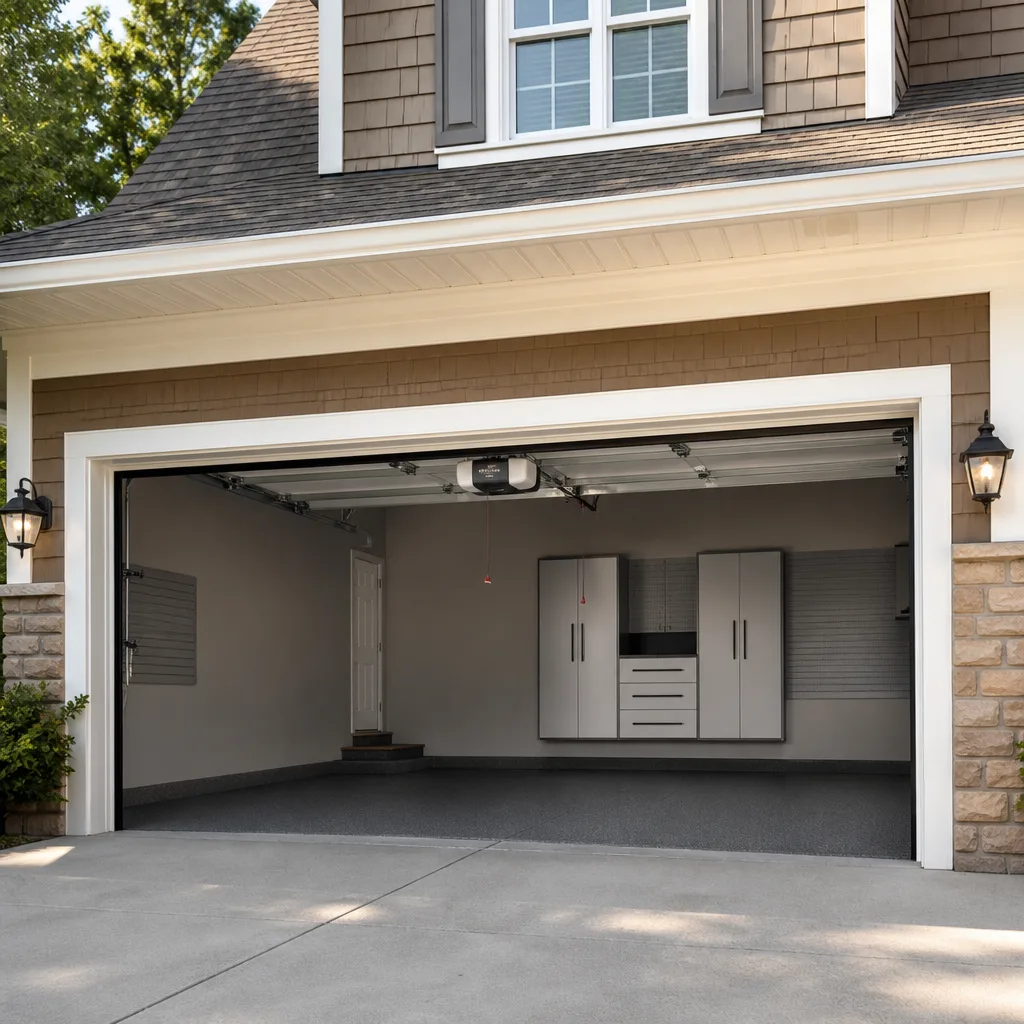 Chamberlain openers
Full 25-point door and opener safety check with every visit - springs, cables, rollers, tracks, and your LiftMaster or Chamberlain opener included
You get a price before we start. It does not change when the truck arrives.
Get your free estimateThe Complete Garage Door Repair Guide for West Palm Beach Homeowners
A torsion spring on a garage door in West Palm Beach fails roughly twice as fast as the identical spring installed on a house in Orlando. The reason isn’t usage or build quality. It’s the salt air moving inland from the Atlantic, settling on untreated steel, and corroding the coil from the outside in. Most national garage door repair guides never mention this because they’re written for inland climates where a spring lasts a decade without complaint. In South Florida, the timeline is compressed, the failure patterns are different, and the stakes during hurricane season are higher than anywhere else in the continental United States.
The Complete Guide to Garage Door in West Palm Beach covers what actually breaks on garage doors here, why it breaks faster here, which repairs must meet Florida Building Code, and how to tell the difference between a cosmetic issue, a functional problem, and a safety hazard that needs attention today. We’ll also walk through what a legitimate repair visit should include and what signals a company is padding the job.
Quick Answer
Garage door repair in West Palm Beach most commonly involves torsion spring replacement, cable repair, track realignment, and opener service, with spring replacement typically running $180 to $340 depending on the spring’s size and cycle rating. Coastal humidity and salt air accelerate corrosion on springs and cables, so West Palm Beach homeowners should have their door components inspected annually, ideally before hurricane season begins in June. Any garage door that won’t stay open, makes a loud bang when operating, or has visible cable fraying is a safety hazard and should be addressed by a licensed professional immediately.
Styles & brands we work with
Table of Contents
- Why West Palm Beach Climate Destroys Garage Doors Faster
- The Most Common Garage Door Failures in South Florida
- Florida Building Code and Your Garage Door: What West Palm Beach Homeowners Must Know
- Cosmetic, Functional, or Safety Hazard: How to Classify Any Problem
- What a Legitimate West Palm Beach Repair Visit Should Include
- Seasonal Timing: Why Pre-Hurricane-Season Inspections Matter
- Garage Door Opener Problems vs. Door Hardware Problems
- Common Mistakes to Avoid
- When to Call a Professional
- Frequently Asked Questions
Why West Palm Beach Climate Destroys Garage Doors Faster
West Palm Beach sits in a unique environmental triangle: Atlantic salt air from the east, tropical humidity year-round, and a hurricane season that turns garage doors into structural pressure points. Each of these factors attacks your garage door system differently, and understanding the mechanisms will help you spot problems before they become emergencies.
The Salt Air Problem
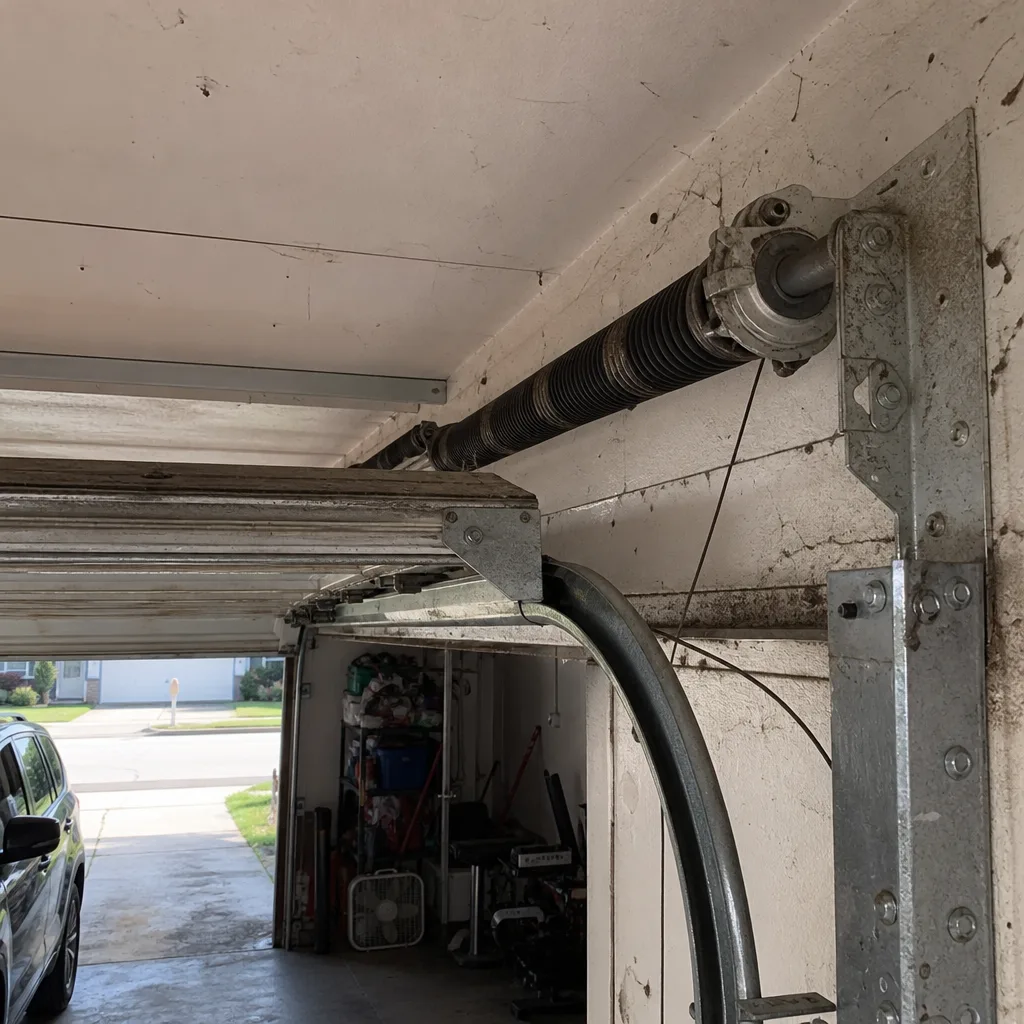
Salt particles carried by coastal winds settle on exposed steel components, especially torsion springs mounted above the door opening. When salt combines with humidity, it creates an electrochemical reaction that strips the protective zinc coating from springs and cables. Once that coating fails, rust sets in.
In our experience working on doors throughout West Palm Beach, untreated torsion springs in coastal neighborhoods like the South End, El Cid, and Northwood routinely show visible rust within 12 to 18 months of installation. The same spring in a drier inland climate might go five years before showing corrosion. This doesn’t mean the spring will fail at 18 months, but it does mean the safety margin shrinks every season.
What to watch for:
- Red-brown discoloration on the spring coils, especially on the side facing the garage opening
- Flaking or powdery residue on cables where they wrap around the drum
- Rust streaks running down from track brackets and hinges
- A grinding or gritty sound when the door moves, which often means rust particles are wearing against moving parts
The Humidity Multiplier
Humidity alone won’t destroy a garage door system, but it amplifies every other problem. Moisture accelerates rust, causes wooden door panels to swell and warp, loosens adhesive bonds in older insulated doors, and creates the perfect environment for mildew inside the weather stripping. For homes west of I-95, where the air tends to hold more standing moisture, we see more issues with panel warping and track corrosion than in neighborhoods closer to the ocean breeze.
Wood garage doors, still common in older West Palm Beach neighborhoods like Flamingo Park and Grandview Heights, need particular attention. Humidity cycling causes wood fibers to expand and contract, which can twist panels out of alignment and put uneven pressure on hinges. Once a panel warps past about a quarter-inch of deflection, it’s worth having a specialist look at whether the door can be adjusted or needs panel replacement.
For more on our local repair services, see Garage Door Repair in West Palm Beach.
The Most Common Garage Door Failures in South Florida
Garage door systems have roughly a dozen failure-prone components, but in West Palm Beach, four problems account for the overwhelming majority of our repair calls. Here they are, ranked by frequency.
1. Torsion Spring Failure
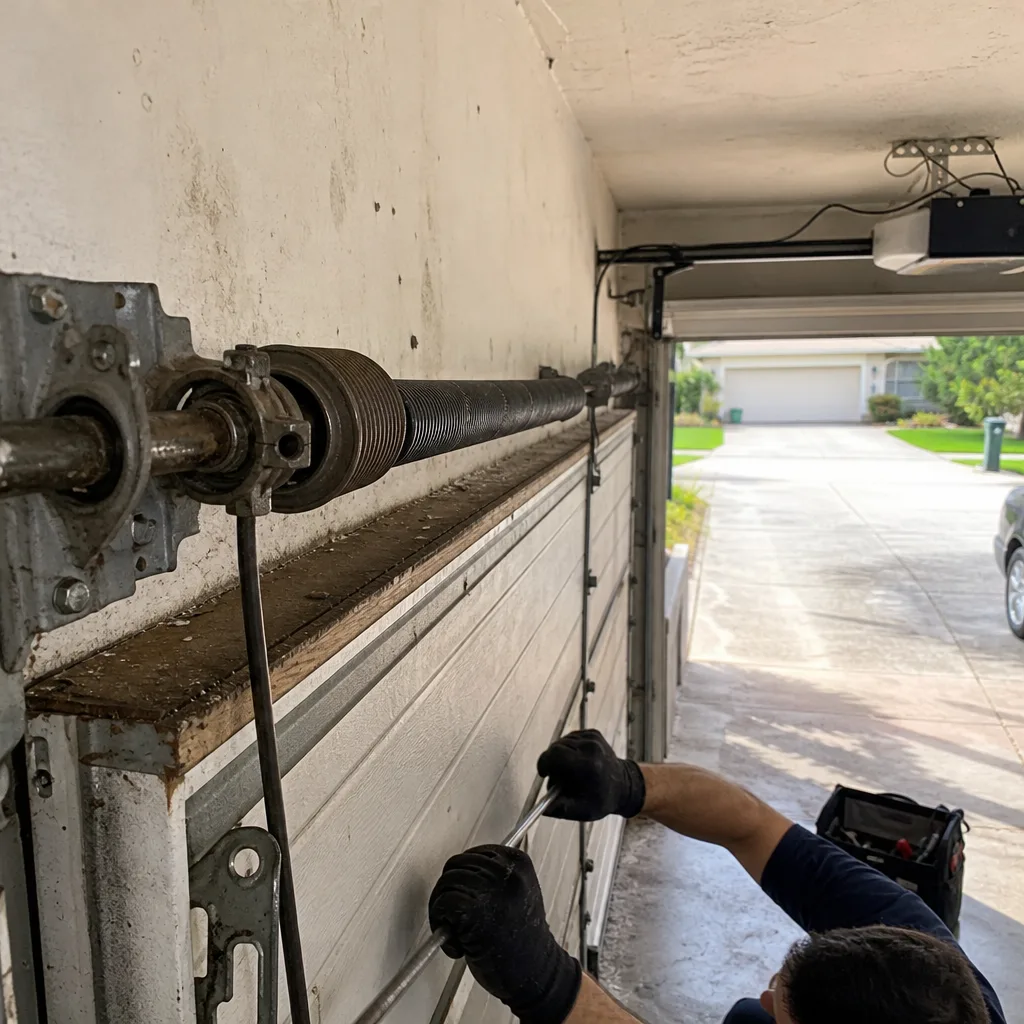
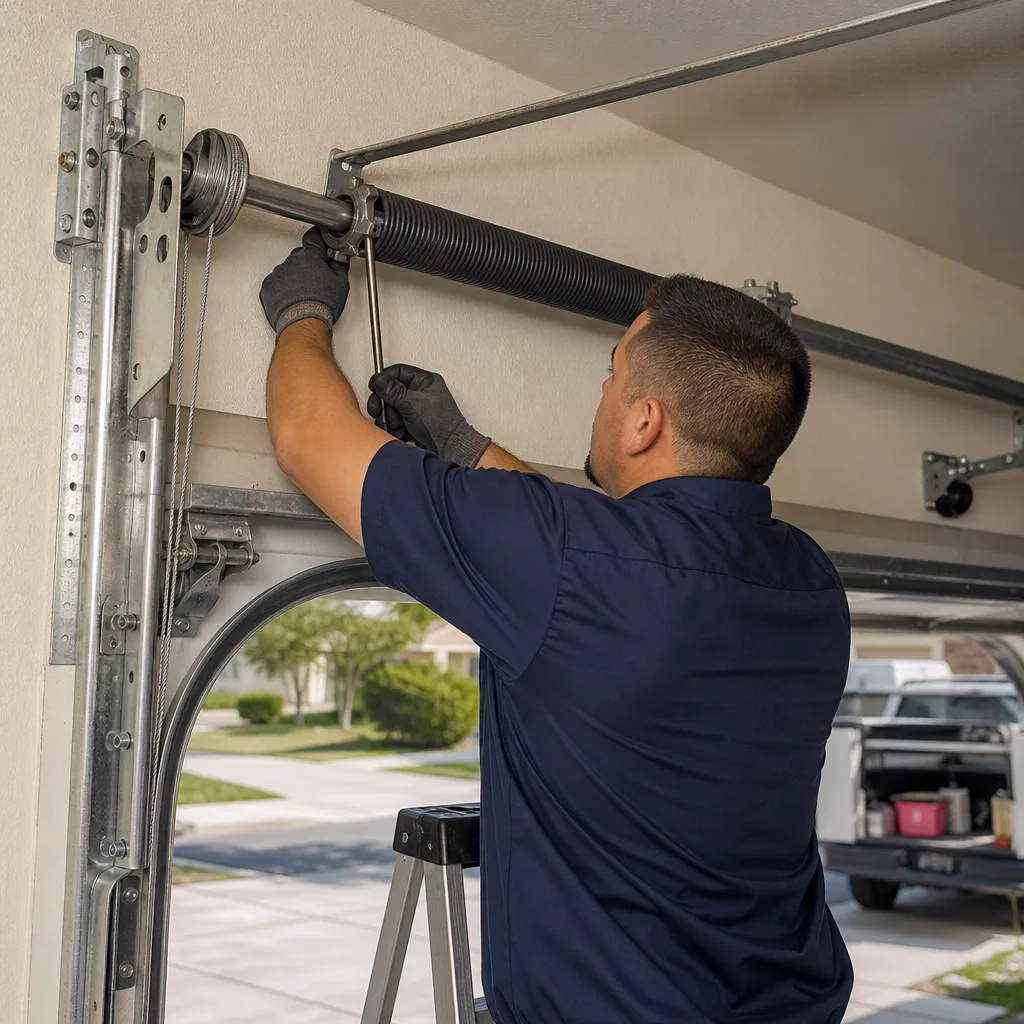
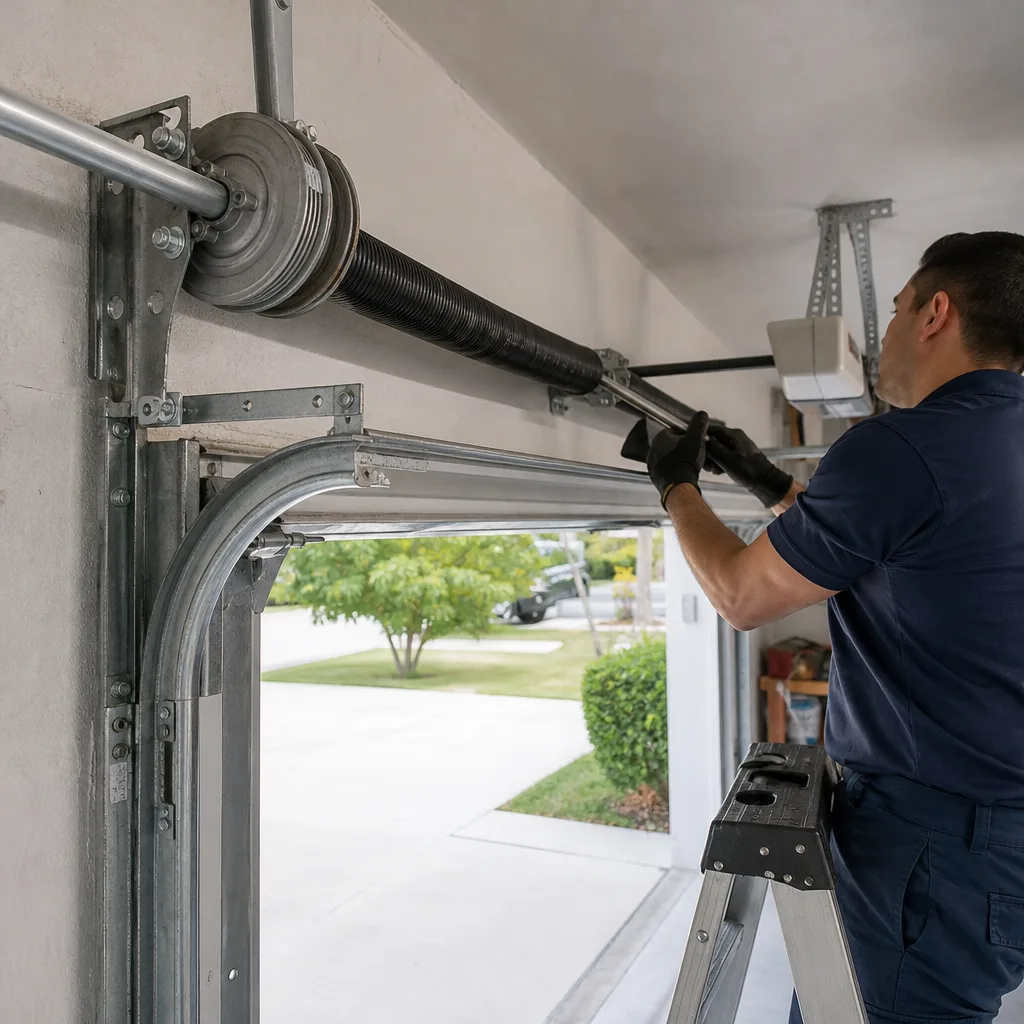
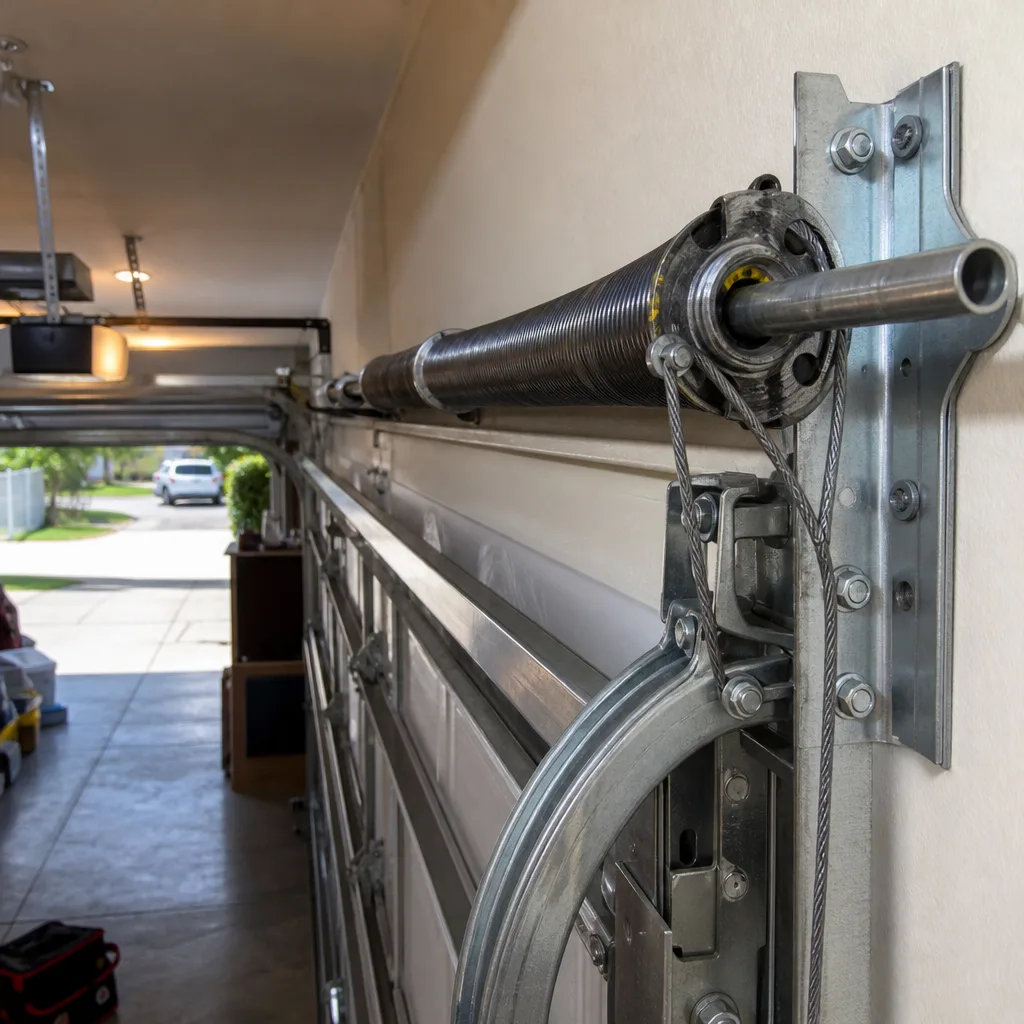
The torsion spring does the heavy lifting every time your door opens. It’s wound under high tension and rated for a specific number of cycles, usually 10,000 for a standard spring. In West Palm Beach, rust shortens that lifespan significantly because corrosion creates weak points in the coil that can snap under load.
A spring failure is unmistakable: it sounds like a gunshot from the garage, and the door will either refuse to open or open only a few inches. This is not a DIY repair. The spring is under enough tension to cause serious injury or death if it releases incorrectly. Call a professional who carries springs rated for South Florida’s corrosion environment.
2. Cable Fraying and Snapping
Lift cables work alongside the springs, winding around drums at each end of the torsion bar. In West Palm Beach’s salt-laden air, cables fray where they pass through pulleys and where they attach to the bottom brackets. A frayed cable can snap without warning, causing the door to drop unevenly and potentially off its track.
Check your cables once a month. If you see any individual wires poking out from the cable bundle, the cable is compromised and should be replaced before it fails under load.
3. Track Misalignment from Thermal Expansion
South Florida’s heat causes metal to expand and contract daily. Over time, the tracks that guide your door can shift, especially if the original installation used fasteners that have loosened in the concrete. A misaligned track creates drag, causes uneven wear on rollers, and puts sideways stress on panels.
You’ll notice this as a door that hesitates at certain points in its travel, scrapes audibly, or doesn’t sit flush against the floor when closed.
4. Opener Motor and Logic Board Failures from Power Surges
West Palm Beach gets more than its share of electrical storms, and power surges are a leading killer of garage door opener logic boards. Surges can also weaken the motor capacitor, causing intermittent operation before total failure. If your opener works sometimes and not others, or if remotes lose programming after storms, the issue is often electrical rather than mechanical.
See Garage Door Opener Repair in West Palm Beach for more on diagnosing opener faults.
Florida Building Code and Your Garage Door: What West Palm Beach Homeowners Must Know
After Hurricane Wilma tore through South Florida in 2005, the state overhauled its building code for garage doors. The changes directly affect what kind of door you can install, what repairs require permits, and whether your homeowner’s insurance will pay out after a storm. West Palm Beach sits in a high-velocity hurricane zone, so these rules are not optional.
Wind-Load Requirements
Any new garage door installed in West Palm Beach must be rated to withstand the wind pressures specific to Palm Beach County’s hurricane zone. This typically means a minimum design pressure rating determined by the size of the opening and the home’s exposure. Large double doors, doors on homes near the Intracoastal or the ocean, and doors with windows all push the rating requirements higher.
When you replace a garage door in West Palm Beach, you’ll need a product with a Florida Product Approval number, documentation showing the wind-load rating, and an installation that follows the manufacturer’s noa (notice of acceptance). A legitimate installer will provide this paperwork without being asked.
Why Repairs Affect Your Insurance
Here’s the part most homeowners don’t realize: if your garage door fails during a hurricane and causes structural damage to your home, your insurer will investigate whether the door met current code. A door installed before 2005, or a repair that used non-compliant parts, can become grounds for a claim denial.
This means that seemingly minor repairs, like replacing a bottom panel or retrofitting a brace, can have real insurance implications. If your door was installed before the Wilma code changes, it’s worth having a garage door specialist assess whether it meets current wind-load standards for West Palm Beach. For new installation guidance, see Garage Door Installation in West Palm Beach.
Permit Requirements in Palm Beach County
Full door replacements typically require a permit through the City of West Palm Beach or Palm Beach County, depending on your property’s jurisdiction. Simple repairs like spring replacement, cable replacement, and track adjustments generally do not require permits. When in doubt, ask your repair company whether a permit applies. A company that shrugs off the question or tells you to skip permits on a full replacement is not protecting your interests.
Cosmetic, Functional, or Safety Hazard: How to Classify Any Problem
Every garage door issue falls into one of three categories. Knowing which category you’re dealing with tells you whether you can wait, whether you should schedule a repair, or whether you need someone out today.
Cosmetic Issues: Watch, Don’t Worry
Cosmetic problems affect appearance but not operation or safety. Examples include faded paint, minor dents, superficial rust on decorative hardware, and weather stripping that’s discolored but still sealing. These can wait until you’re ready to address them, often alongside a planned maintenance visit.
Functional Problems: Schedule a Repair Within Days
Functional problems make the door unreliable or annoying but don’t pose an immediate safety threat. A door that reverses randomly, an opener that requires multiple button presses, rollers that squeak loudly, a door that’s slightly out of balance but still opens, or a remote that works inconsistently all fall into this category. You should address these within a week or two, before they turn into safety hazards.
Safety Hazards: Act Today
These are conditions where the door can fail catastrophically and injure someone or damage property. If you notice any of the following, stop using the door and call a professional:
- A visible gap or separation in the torsion spring (it’s broken or about to break)
- Frayed or broken lift cables, even if the door still operates
- A door that falls quickly when the opener releases it
- A door that shakes violently during operation
- Bottom brackets that are loose or pulled away from the door
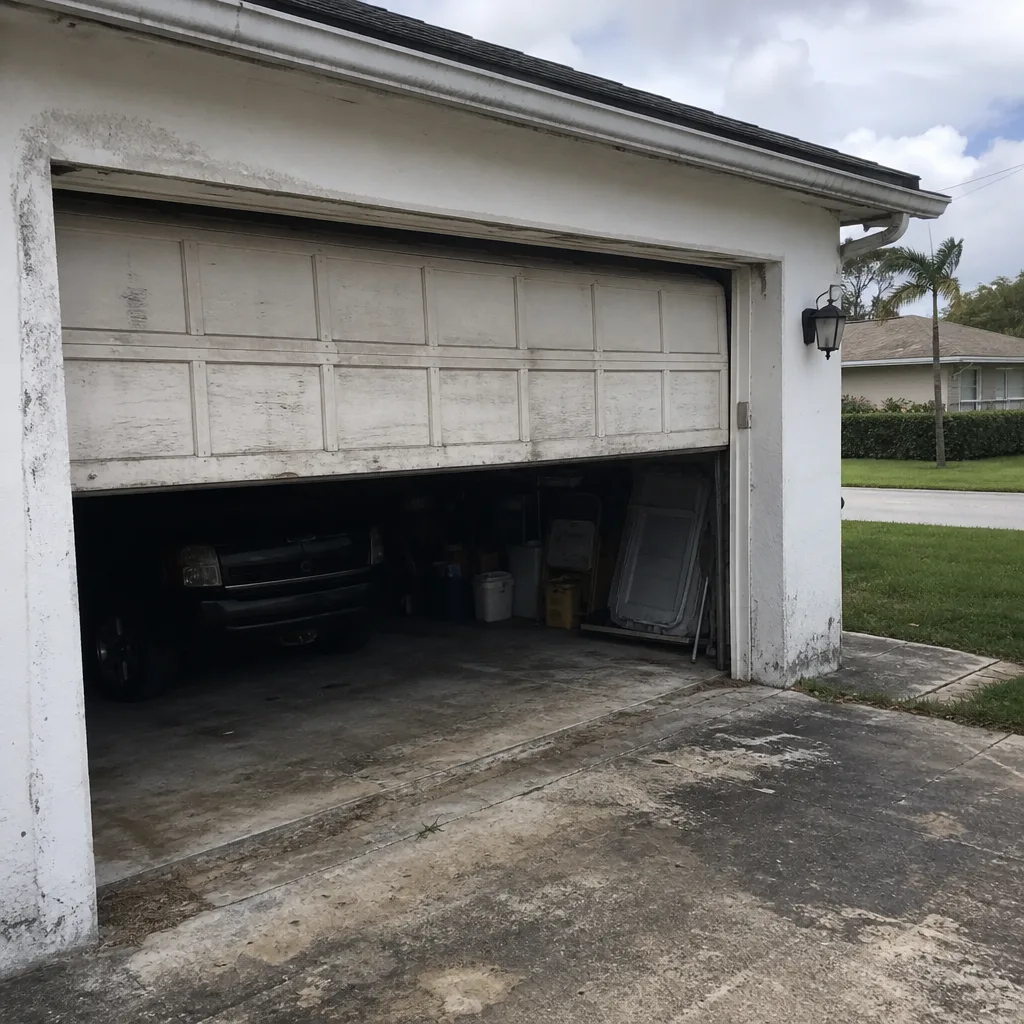
- A door that won’t stay in the open position and sags downward
Any of these could result in a door that drops from the open position, and a residential garage door weighs between 130 and 400 pounds. That’s never worth the risk of waiting.
What a Legitimate West Palm Beach Repair Visit Should Include
A reputable garage door repair visit follows a predictable pattern. If a company shows up and starts replacing parts without diagnostic steps, or if the visit lasts less than 20 minutes, you’re likely being padded or shortchanged. Here’s what a proper visit looks like.
- Visual inspection of all moving components. Springs, cables, rollers, hinges, tracks, and brackets should be checked on both sides of the door. This takes time.
- Balance test. The technician disconnects the opener and manually lifts the door to about waist height. A properly balanced door stays in place. A door that drops or rises on its own has a spring problem.
- Opener cycle test. The opener’s force settings, safety reversal, and photo-eye sensors should be tested for proper function.
- Photo-eye alignment check. The safety sensors at the bottom of the track should be tested to ensure they stop the door from closing on objects or people.
- Written quote before work begins. Every repair company operating in West Palm Beach should provide a clear price for the diagnosed work before touching anything. No exceptions.
- Explanation of options. A good technician tells you what needs immediate attention, what can wait, and what your options are for parts quality. You should never feel pressured into full replacement when a component repair will do.
What signals a company is padding the job? Refusing to give a written estimate, claiming every spring needs replacement when only one is broken, insisting your entire opener needs replacement for a sensor issue, and quoting a price before even looking at the door. These are red flags in any market, but they’re especially common in South Florida’s high-turnover repair economy.
Seasonal Timing: Why Pre-Hurricane-Season Inspections Matter
Hurricane season runs from June 1 through November 30 in West Palm Beach, and the weeks leading up to June 1 are the highest-stakes window for garage door repair on the calendar. Here’s why.
Your garage door is the largest opening in your home’s exterior envelope. During a hurricane, wind pressure pushes against the door from the outside. If the door fails, the pressure differential can lift your roof from the inside. This is exactly the scenario the post-Wilma building codes were written to prevent.
A pre-season inspection should cover:
- Spring condition and balance testing
- Cable integrity on both sides
- Track alignment and fastener security
- Panel condition, especially around hinges and mounting points
- Opener operation and battery backup function
- Bottom seal replacement if it’s cracked or compressed
We strongly recommend scheduling this inspection in April or May, before the seasonal rush. Once a storm is named and heading toward Palm Beach County, every repair company in the area is booked for days.
Garage Door Opener Problems vs. Door Hardware Problems
One of the most common sources of wasted repair money is misdiagnosing whether the problem is in the opener (the motorized unit on the ceiling) or the door itself (the panels, springs, cables, and tracks). Here’s how to tell them apart.
Signs the Opener Is the Problem
- The motor runs but the door doesn’t move (broken gear or carriage in the opener)
- Remotes and wall buttons work inconsistently (logic board or receiver issue)
- The door reverses immediately after touching the floor (opener force settings out of adjustment)
- Grinding or whining from the motor unit itself (gear or bearing failure in the opener)
- Light flashes on the opener but no movement (sensor or logic board fault)
Signs the Door Hardware Is the Problem
- The door opens a few inches and stops even though the motor runs (broken spring)
- Visible cable fraying or a snapped cable hanging from the track
- The door binds, scrapes, or sticks at certain points in its travel (track or roller issue)
- The door is difficult to lift manually even when disconnected from the opener (spring tension problem)
- Loud popping or cracking sounds from the door itself, not the motor
LiftMaster, Chamberlain, Genie, and Raynor openers are among the most common units installed in West Palm Beach homes. We work on the door you already have, whatever brand it is, rather than pushing a full system replacement when a component repair will solve the problem.
Common Mistakes to Avoid
- Ignoring a squeaking door for months. Squeaking is often the first sign of a dry, rusted spring or rollers losing their bearings. What starts as $20 of lubrication ends as a $300 spring replacement when the noise is ignored long enough.
- Spraying WD-40 on garage door springs and rollers. WD-40 is a penetrant, not a lubricant. It strips away the grease your components need and accelerates wear. Use lithium grease on metal-to-metal parts and silicone spray on rollers and hinges.
- Using the door right after a hurricane warning without inspecting it first. Even if your door survived the last storm, weakened components may have been stressed. Run a full inspection before relying on the door again.
- Replacing a broken spring with one of the same size but inferior cycle rating. Not all springs are equal. A 10,000-cycle spring costs more than a 7,500-cycle spring but lasts significantly longer, especially in West Palm Beach’s corrosive environment. Ask what you’re getting.
- Attempting DIY spring replacement. Torsion springs are under hundreds of pounds of tension. A mistake can be fatal. This is the one garage door repair where the cost of professional service is always worth it.
- Waiting until the door stops working entirely before calling for repairs. A door that’s been struggling for weeks has already damaged related components. The earlier you address a problem, the smaller the repair bill.
When to Call a Professional
Any issue involving torsion springs, lift cables, or a door that’s come off its track requires professional attention without exception. These components operate under dangerous tension, and the tools and knowledge required to work on them safely are not something most homeowners possess. If your door is showing signs of rust on the springs, if you hear grinding from the opener, or if the door won’t balance, stop using it and make a call. Attempting DIY vs Professional Garage Door repairs on high-tension components risks serious injury, and in West Palm Beach’s climate, a small fix done wrong can turn into a big fix within months.
Langston Garage Door Repair offers free estimates in West Palm Beach, and our work is priced and agreed with you before anything starts. Call (833) 302-7392 and we’ll help you figure out what’s actually wrong. For an overview of our full service area, see the Langston Garage Door Repair home page.
Frequently Asked Questions
Most garage door repairs in West Palm Beach fall between $125 and $450 depending on the specific part and scope of work. Torsion spring replacement typically runs $180 to $340, cable replacement $150 to $250, and track realignment $125 to $200. Opener repairs range from $100 for a sensor fix to $350 for a gear or logic board replacement. Call (833) 302-7392 for an exact quote, and we’ll provide a written price before any work starts.
In most cases, yes. We keep our West Palm Beach schedule flexible for safety hazards like broken springs and snapped cables, and we carry the most common replacement parts for LiftMaster, Chamberlain, Genie, Raynor, and other major brands so we can usually complete the repair in one visit. Call (833) 302-7392 and we’ll give you an honest arrival window.
No. The price we quote after diagnosis is the price you pay. We don’t add surprise fees, and we won’t start any work without your approval. If we find a secondary issue while working, we’ll stop, show you what we found, and give you a separate price for that item before touching it.
If you have a residential garage door system from LiftMaster, Chamberlain, Genie, Clopay, Amarr, Wayne Dalton, Craftsman, or Raynor, we service it. We work on the door you already have, and our technicians are trained specifically on these eight brands because they cover the vast majority of systems installed in Florida homes.
Most component repairs like spring, cable, and roller replacement do not require permits or code recertification. However, if a repair changes the structure of the door, such as panel replacement or adding a hurricane brace, a permit may apply. If you have a full replacement planned, the new door must meet current wind-load requirements for your specific location in West Palm Beach. We’ll keep you straight on which work requires what paperwork.
Annual inspections are the right cadence for West Palm Beach homeowners, ideally scheduled in April or May before hurricane season. Coastal properties and homes within a mile of the Intracoastal may benefit from twice-yearly checks due to accelerated salt corrosion. An inspection catches spring rust, cable fraying, and opener electrical issues before they become full failures. For more guides & resources on maintaining your system, visit our blog.
The Bottom Line
West Palm Beach garage doors live harder lives than doors almost anywhere else in the country. Salt air, humidity, and hurricane-force wind loads all take their toll, and the failure patterns here don’t match what generic repair guides describe. The smart approach is annual inspections, specific attention to springs and cables, prompt repair when problems surface, and a technician who knows the difference between cosmetic wear and a pre-failure safety condition. If you’re dealing with a failing door or opener, or if you want to get ahead of hurricane season with a pre-storm inspection, give Langston Garage Door Repair a call at (833) 302-7392. We’ll assess the door, tell you what matters and what doesn’t, and quote the work before we start.
Written by the team at Langston Garage Door Repair, serving West Palm Beach since 2012.
See the difference
 Before
 After
 Before
 After
 Before
 After